
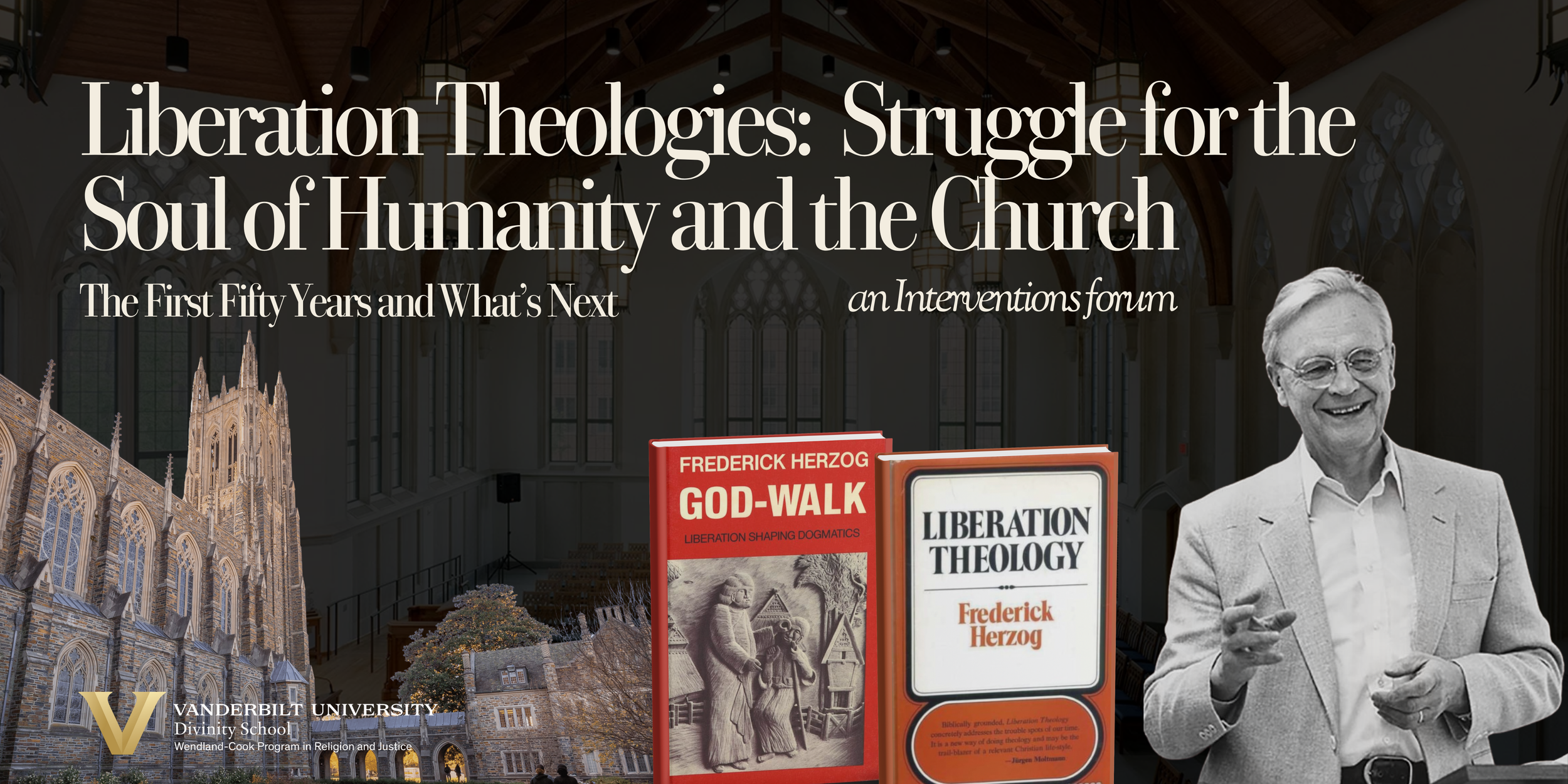
Liberation Theologies and the Struggle for the Soul of Humanity and the Church: The First Fifty Years and What’s Next
An Interventions Series on the Legacy of Frederick Herzog
Liberation theologies have been declared trendy, sexy, cool, passé, obsolete—even dead. Yet they have proven irrepressible and, at the beginning of the second quarter of the twenty-first century, more relevant than ever.
The origins of liberation theology are shrouded in myth. One of the most persistent is the belief that it was invented by towering theological figures such as Gustavo Gutiérrez and James Cone. Equally misleading is the assumption that liberation theology was a uniquely Latin American innovation later exported to the rest of the world.
Closer to the truth is that liberation theologies emerged out of concrete liberation movements. This is why the term appeared almost simultaneously in different contexts, without theologians borrowing from one another. In the early 1970s, Cone and Gutiérrez independently articulated liberation theology within their own struggles: the African American civil rights movement in the United States and Latin America’s recognition that liberation—not development—was urgently needed. Less widely known is the fact that a white theologian in the southern United States also arrived independently at the term, giving rise to another, often overlooked strand of liberation theology.
That theologian was Frederick Herzog of Duke University. Herzog was the first to publish an article titled “Liberation Theology” (republished here), in 1970—two months before Cone’s A Black Theology of Liberation and prior to Gutiérrez’s Teología de la liberación and Rosemary Radford Ruether’s Liberation Theology, which appeared in 1971 and 1972 respectively.
What matters is not precedence for its own sake, but the recognition of a genuine and less well-known strand of liberation theology that still has vital lessons to offer today. Since Cone, Gutiérrez, and Ruether are better known, this volume focuses on Herzog, his legacy, and what emerged from his work in the decades that followed.
Notably, the year 2025 marked several important anniversaries: fifty-five years since Herzog’s article “Liberation Theology” was published, thirty years since his untimely death during a faculty meeting at Duke Divinity School, and one hundred years since his birth.
In the entries that follow (releasing weekly), Herzog’s students and colleagues—from multiple generations and long engaged in liberation struggles—reflect on what they learned from him, how their own work developed through conversation and disagreement with him, and what they see as the most pressing theological and political challenges of our time.
Contributors: Joerg Rieger, Benjamin F. Chavis, Jr., Melinda Wiggins, M. Douglas Meeks, Mark W. Wethington, Jürgen Moltmann.

Herzog's Solidarity of Suffering
Joerg Rieger
February 2, 2026
“You don’t understand what theology is unless you have looked in the face of suffering, unless you have become an atheist in the presence of pain.”
A few months before Fredrick Herzog published his inaugural article on liberation theology, he penned this sentence in the newsletter of Duke Divinity School in April of 1970 (“Let us Still Praise Famous Men,” republished in Theology from the Belly of the Whale). In this article, he remembered his friend William Edwards, an African American fireman, sharecropper, and eventual paraplegic, who taught him what he called “the Bible in hand method.”
In his office at Duke Divinity School in the late 1980s, the only picture Herzog kept on his wall was of William Edwards, rather than of any of his famous teachers. His students and even some of his colleagues were unaware that Herzog once was the favorite student of Karl Barth and lived in Barth’s house for several years. While Barth’s theology has its place in history and is still of value in many theological circles, what Herzog learned from Edwards changed the course of theology for him: reading the Bible in the deepest struggles of everyday life, starting in the cottonfields of North Carolina, was the engine that for Herzog would transform theology, the church, and ultimately the world.
At the heart of this transformation was a rejection of dominant conceptions of God in the image of the powerful that had failed people, planet, and religion. It took me a while to understand the full implications of this after I began my studies with Herzog. But this is what changed everything. As a result, I ended up writing my Ph.D. dissertation on his work, comparing North American Liberation Theology with Latin American Liberation Theology and the work of Gustavo Gutiérrez, using the lens of poststructural theory.
I came to realize—much later—how essential becoming “an atheist in the presence of pain” was, not only in that moment but for Christianity as a whole. In Jesus vs. Caesar, I explore how Roman philosophers accused early Christians of atheism—not because they denied God, but because the Christian God did not conform to the dominant gods of theism. This is what Herzog rediscovered: atheism was an essential part of Christian theology because it meant the rejection of dominant theisms, and this kind of atheism allowed for the embrace of an altogether different God: the God of Jesus Christ.
For Frederick Herzog, what was at stake was never merely theological ideas. It was also how theology emerged in real life and was lived—in solidarity with those exploited and oppressed by the powers that be. Deeply engaged in the civil rights struggle (three African American choirs sang at his funeral years later), and supportive of liberation movements from Durham, North Carolina, to Lima, Peru, Herzog understood that struggles for liberation are where faith truly matters—and where God is to be found.
In the final article he wrote before his untimely death, he insisted: “Only if we change ourselves in view of these ‘invisible people’ will we become aware of the ‘invisible God.’ Here anchors our theological future” (“New Birth of Conscience,” republished here).
Some of Herzog’s later theological insights emerged through rediscovering and reclaiming God in what he came to call liberation theology. In the Solidarity Circles of the Wendland-Cook Program in Religion and Justice at Vanderbilt we continue to remember his powerful insistence that “the church cannot be built from within” (“Dual Citizens”) —a claim developed at a time when many of his colleagues assumed the church was the center of everything.
The theological point should be obvious but makes all the difference: God can never be confined to the church. At the center is not the church, but the divine. This is closely tied to a question Herzog often posed in the classroom: “What is Jesus doing now?” Frequently mistaken for a Sunday school question, it is in fact central to liberation theology—and it surpasses the worn-out WWJD formulation, “What would Jesus do?”
In my own work, I developed these insights further and explored one of the most widespread misconceptions about liberation theology: that liberation theologies are merely special interest theologies, relevant for some and not for others. This misconception is furthered by a widespread understanding of liberation theologies as contextual theologies.
Yet if context is understood not as personal circumstance but as what hurts—and if God in Christ is at work precisely in those places—then what appears to be special interest becomes common interest. Herzog used to call it “solidarity of suffering” (“Full Communion Training”), in response to the apostle Paul’s reminder that “if one member suffers, all suffer together with it” (1 Cor 12:26). In my own work over the past dozen years, I have been calling this “deep solidarity” (Theology in the Capitalocene).
The lesson for theology, the church, and social movements alike is this: special interest is not a matter of engaging particular forms of suffering, but of a failure of solidarity.
Joerg Rieger is the Distinguished Professor of Theology, Cal Turner Chancellor’s Chair of Wesleyan Studies at Vanderbilt Divinity School and Graduate Department of Religion, Affiliate Faculty, Turner Family Center for Social Ventures, Owen Graduate School of Management, Vanderbilt University, and the Founder and Director of the Wendland-Cook Program.
Sermon in Commemoration of Dr. Frederick Herzog
Benjamin F. Chavis, Jr.
February 9, 2026
Dated October 9, 2025
Duke University Divinity School, Durham, North Carolina
Good morning. Today is another faith-filled day that the Lord hath made. We are called to celebrate and to acknowledge the goodness and the love of God through Jesus Christ.
We are here today to remember a profound professor-scholar. To pay tribute to a transformational theologian. We are here to worship a loving God who brought into the Duke Divinity School community a rare, wise, and compassionate visionary whose theological utterances and witness have rendered a pathway for faith, social change and liberation. In the midst of today’s worship service, we are here to thank God for the life and living legacy of theologian Dr. Frederick Herzog.
The exegesis of both the selected Old Testament and New Testament texts reveals and reminds us of the prophetic essence of the Judeo-Christian tradition,
In Micah 6:8, it is written: “He has shown you O people. What does the Lord require of you, but to do justice, love mercy and to walk humbly with thy God.”
Micah spoke to a people who had grown comfortable with empty religious offerings and rituals without righteousness. This text also applies today where some who are in high places of authoritative power willingly manifest the idolatry of fascism, racism, antisemitism, and hatred for others. God’s question enables the prophet to cut through the noise: “What does the Lord require?” Not more sacrifices, not burnt offerings, but a moral covenantal life—justice (mishpat), steadfast love (hesed), and humble fellowship with God.
“Justice” here is not abstract fairness—it is restorative. It is the right ordering of community life so that the poor, the widow, the stranger, and the oppressed are protected and uplifted.
“Mercy” is love in action—compassion that reaches out.
“Humility” is to walk knowing that it is God—not social, not economic or political power—who defines the worth, value, and truth of the oneness of God and the oneness of humanity.
Dr. Herzog, in his historic ecclesiological reflections on the mandate of the contemporary church, prophesized the ontological affirmation that “Liberation Theology” presupposes the oneness of humanity.
Herzog’s message aligned with Micah’s message: True worship is social righteousness. True faith is public responsibility. The liberation of humanity from oppression, hatred ,and unrighteousness requires activation of the communities of faith to demand and to defend freedom, justice, equality, equity, and peace.
When Jesus stood boldly inside of the synagogue of Nazareth, as we find in the Gospel of St Luke, (4:16-21), he declared with that same prophetic passion, “The Spirit of the Lord is upon me..... to bring good news to the poor, release to the captives, recovery of sight to the blind, and freedom for the oppressed.”
Micah asks the question. Jesus the Christ answers the question. The Spirit of Lord requires action, faith, love, and liberation.
When Jesus says, “Today this scripture is fulfilled in your hearing, “He reveals that the work of liberation, mercy, and justice is not postponed to an eternal afterlife in heaven—it is inaugurated today in Christ Jesus. Micah’s moral vision becomes the Messiah’s mission.
In the Black Church tradition, we know the Lord makes a way out of no way.
Micah 6:8 is the ethical foundation. Luke 4:16-21 is the incarnational fulfillment. Micah tells us what God requires; Jesus shows us how God empowers. The prophet demands justice; the Messiah embodies it. Micah calls the people to walk humbly with God; Jesus walks among the humble to lift them up, in other words to liberate. Together, this theological convergence represents a sacred continuum:
Faith and justice are inseparable.
Worship and liberation are intertwined.
The love of God through Jesus Christ must manifest as love of neighbor.
Who is the neighbor? The oneness of all of humanity is a consequence of the oneness of God.
From 1959 to 1995 at Duke Divinity School, Dr. Herzog refused to let theology be locked up in the ivory tower. No—he took it into the streets, into the struggles, into the cries of God’s people. He knew that if theology doesn’t walk with the poor, if theology doesn’t march with the oppressed, if theology doesn’t liberate the captive, then it is not worthy of the name.
And Dr. Herzog heard that Word. He knew Micah was speaking into our time, into our America, into our churches. Churches that sometimes love respectability more than righteousness, that sometimes love prosperity more than prophecy, that sometimes love ritual more than justice.
Herzog’s Witness
This is why Herzog would not let us get comfortable. He took his students from the classroom into the city. One student remembered how Herzog stopped a lecture on Karl Barth mid-sentence and said, “Enough about Europe—come with me.” He piled them into cars and drove to the Hayti neighborhood of Durham, where they sat with pastors and laypeople struggling for justice. He told them, “This-this is your classroom. This is where theology begins.”
Another time, during the Durham sanitation workers’ strike, Herzog was asked if he wasn’t afraid to be seen standing with the laborers. He just smiled and said: “If Jesus wasn’t afraid to be crucified between two thieves, I can at least stand with workers seeking a living wage. “ That was Herzog. Always turning the gospel loose in history. Always reminding us that God sides with the oppressed.
Herzog’s voice speaks with undiminished urgency, calling us to reconsider what it means to engage in theology as public witness and as a liberation praxis. To remember the present-day power of Herzog’s vision is to wrestle anew with his unyielding challenge: The Gospel of Jesus Christ should not be privatized, domesticated, or reduced to metaphysical speculation. Instead, the Gospel is to be lived in the concrete struggles for justice, liberation, and reconciliation every hour of every day.
Herzog told us: Liberation theology presupposes the oneness of humanity. That means my freedom is tied up with your freedom. Your dignity is bound up with my dignity. And until all God’s children are free, none of God’s children are free.
Beloved, if ever there was a time when the church needs to hear Herzog’s voice again, it is today.
We live in a world where racism still divides, where violence still destroys, where the poor are still pushed aside, where creation itself groans from pollution and climate change. And yet God is still asking us: “What does the LORD require of you?”
Herzog would say: “Sisters and Brothers, this is our calling. This is our theology. This is our life. This is our faith”.
So today, as we honor Professor Frederick Herzog, we do more than remember him—we recommit ourselves. His voice still echoes: “Theology must be done in the streets. Theology must be done with the people. Theology must be done for the sake of liberation in the name of Jesus Christ.”
Closing Poetic Tribute to Dr. Herzog
The prophet spoke, the call is clear, Do justice now, God’s reign is near.
Frederick Herzog proclaimed with fearless tone, That Christ is Lord, and Christ alone
Herzog walked with faith where struggles cried,
He stood with truth, with none denied.
His voice declared both loud and strong: God’s kingdom breaks oppression’s wrong.
One human race, one hope, one call, One God of love who frees us all.
The church must rise, the world must see, God’s justice born through you and me.
So let us live the way he taught, With holy fire, with gospel thought.
Herzog’s liberating legacy still shines today, As Christ still leads us on our way.
Amen.
Reverend Dr. Benjamin F. Chavis, Jr. is an ordained minister in the United Church of Christ and a 60-year veteran of the American Civil Rights Movement. Dr. Chavis is the former Executive Director and CEO of the NAACP and currently Senior Fellow for Divinity and Interdisciplinary Studies, Duke University Divinity School.

Re-centering on God-Walk
Melinda Wiggins
February 16, 2026
During the fall of 1992, I moved to Durham, North Carolina from the Mississippi Delta, sight unseen. I was a first-year divinity school student at Duke University, hailing from a Pentecostal church in a very small, rural, segregated community a couple of hours south of Memphis. I applied to divinity school not sure about what to do after receiving a degree in political science and history from Millsaps College, and with the encouragement of my advisor who knew I was trying to make sense of social justice in the context of my evangelical upbringing. I hardly knew it at the time, but those two years at seminary helped me to move forward in a way that felt both loyal to my home community and that pushed me to rethink some harmful teachings I’d learned about the church, white privilege, and my role in the world.
I found it hard to be at the divinity school. Though I was used to lots of Jesus talk, many of the God-focused conversations at the school felt stifling. I recall lots of arguments with other students about God’s gender, conflicts with the school about whether working with a homeless shelter qualified as field education, and learning that according to systematic theology, I was a heretic. I considered leaving.
Thankfully, I met and started studying with Frederick Herzog, Mary McClintock Fulkerson, and Teresa Berger, all of whom challenged me in the ways I was seeking. I took all of their classes focused on liberation and feminist theology. I supplemented these classes with ethics classes in public policy and with a semester in Washington, DC, at Wesley Theological Seminary focused on Ethics, Theology, and Public Policy that included an internship in the homelessness division at HUD.
Classes with Dr. Herzog furthered my understanding of a theology in which action precedes reflection and theory. And while I have participated in a number of anti-oppression, anti-racism, and equity trainings since divinity school, I was introduced to social location in Dr. Herzog’s classes—the understanding that our view of the world is based on our identities and that the intersection of these identities affects our experiences, privilege, and power. Understanding social location enabled me to analyze the socio-political context in which I had grown up from a faith perspective that was grounded in praxis. It facilitated a reconciliation with my understanding of race and class as witnessed in the Delta. Dr. Herzog’s teachings and writings affirmed that God is on the side of marginalized and oppressed communities and that theology can only be relevant and credible in light of the realities in places like the Delta. It helped me understand that being in solidarity with the poor was the discipleship required for justice work.
Between my two years of divinity school, I participated in an internship with Student Action with Farmworkers (SAF). I worked in rural Eastern North Carolina with mostly undocumented Mexican farmworkers through the Episcopal Farmworker Ministry and Church Women United. SAF’s popular organizing method allowed me to apply the concepts of liberation theology to worker organizing. I dove deep into popular organizing and theatre of the oppressed pedagogy with guidance from the Highlander Research and Education Center and later from Popular Education Consultants. I found that popular theatre embodied what Dr. Herzog had emphasized regarding the corporateness of God with us in history. Through theatre of the oppressed, when spect-actors perform real life scenarios, they create space for dialogue and practice of potential action to make change in their lives. These embodied experiences helped me to practice and witness commitment to mutual accountability with one another.
After transitioning from SAF in 2022, I worked with The LIFT Fund for several years, helping to launch a fund to support worker organizing in the US South. I applied the concepts of liberation theology to philanthropy, supporting the organization to explore participatory grantmaking. I am now part of a regional labor studies initiative that organizes young workers, trains union members on labor history, and educates allies about current labor campaigns. Labor South engages educators and movement leaders to come together for political education and labor studies and to build a career pipeline with working class young people. We utilize popular education as our organizing methodology, grounding critical consciousness and collective action in workers’ lived experiences.
I have at times, especially recently, been angry at God for allowing so much injustice to prevail in our communities. While building for decades, the current Trump administration seems a fine example of Dr. Herzog’s assertion of our country’s commitment to empire over Christ. Partly because I have been unchurched since divinity school, I rarely have theological discussions in the ways that only seem to happen there. So, I recently re-read Dr. Herzog’s God-Walk. I found it a challenging read, not only because of its theory-laden text, but also because of its Christo-centrism and clear sense of the time in which it was written (nearly 40 years ago). At the same time, it was helpful in remembering his teachings, reminding me that God is walking alongside humans as co-workers, co-creators, and I will add co-conspirators, in the struggle for justice through history.
After more than thirty years of organizing with workers in the US South, I am much more versed in the secular practice of popular organizing than theology. And yet I know that liberation theology (as well as Pentecostalism) shaped my journey and continues to reinforce the importance of personal experience and relationships, which facilitate our movement to collective analysis, action, and liberation.
Melinda Wiggins is the director of Labor South: Center for Working Class Studies, which engages workers, movement leaders and academics to come together for political education and labor studies and to build a career pipeline with working class young people in the US South. For over 25 years, she directed Student Action with Farmworkers advancing just living and working conditions for and with immigrant workers in the Carolinas. Melinda studied liberation and feminist theology at Duke Divinity School and is the daughter and granddaughter of sharecroppers from the Mississippi Delta.
Remembering Frederick Herzog
M. Douglas Meeks
February 23, 2026
During a sweltering Durham summer, as a second-year student at Duke University Divinity School, I took Frederick Herzog‘s course on the Gospel of John (which later became his book Liberation Theology). As a college student, I had been exposed to higher criticism of the Bible and to a progressive social gospel. But God, what about God? That was my faith crisis, which I had dealt with by absorption in process theology seasoned by Tillich. Entering Divinity School, I was intrigued by Professor Herzog, who was taking seriously, among the smorgasbord of multiple theologies on offer at that time, Black and Latin American liberation theology. But I was unprepared for what I encountered in Herzog’s treatment of the Gospel of John
I could tell he had read the commentaries, but he did not follow the rules of higher criticism, nor did he follow the mold of any doctrine of God I knew. He claimed the Bible was not the Word of God, but that Jesus was the Word of God. To know God, one had to tell and live the story of Jesus. That was the starting point of theology. But a second shock was in store. The revelation, the uncovering of God, happened not in the text itself but in God's presence in the suffering of human beings and, in particular, Black human beings.
I was “woke.” Awakening, as Jesus claims, is necessary for discipleship. But it was not easy. Getting to know this teacher was a new take on my own identity. I was raised in Memphis in a working-class family. From a young age, I was haunted by the suffering of Black people, but I remained mostly isolated from the white oppression of Black people. I slowly came to know a bit about my teacher. He was raised in a Dakota Reformed community, went to Germany to study, and was caught up in the horror of World War II. It was not until he had returned to the United States to study with Paul Lehman at Princeton and to teach at the Reformed seminary in Sheboygan, Wisconsin, that this highly educated theologian ended up in, of all places, Durham, North Carolina, a hotbed of Southern racism and classism. This cultural shock impacted his life and work until the end. His awakening stoked my own awakening to how the Bible deals with the suffering of Black people.
This was a new way, a new orientation, of doing theology. It made me wonder how my teacher came to this uncomfortable way of doing theology. Herzog was in the train of Barth’s transformation of modern theology. He lived in the Barth home while he was editing a volume of Barth’s Church Dogmatics. Aspects of Barth’s theology are present in Herzog’s theology, but he studiously resisted being a Barthian.
Incarnation had to be thought differently. The Word of God is enfleshed in a way Israel and the church don't want. It is despite all resistance, ever present in the Passover meal: Once we were slaves and with a mighty arm Yahweh brought us out of the house of bondage. This story is the name of God; to name God we tell a story of liberation.
But there was another crucial shaping of Herzog’s theology that is not often recognized. It is surprisingly: radical pietism. On the stairs going up to the second floor of the Herzog house were hanging pictures of the main pietist theologians and at the top was a picture of John Wesley. While he was opposed to Schleiermacher’s subjectivity, at his core Herzog had the fierceness of some of the pietistic tradition that emphasizes the personal transformation of God's grace in the community and life with the forsaken. You had to go beyond faith and hope to the love that enables life with the oppressed. Otherwise, the Reformation could not be whole.
What can this possibly mean for the American church? Herzog labored over this question for the last twenty years of his life. In 1976, I spent six weeks in the German Democratic Republic analyzing the education institutions that belonged to my host, the Evangelische Kirche der Union (EKU). When I returned, the United Church of Christ asked me to form a working group that could enhance relationships with the EKU. The first person I asked to join the group was Frederick Herzog.
For the next twenty years I worked even more closely with Fred and learned month by month his deep love of the church, his radical criticism of the church, and his vision of what the church could be in the United States. His thoughts and his action in those years are found in his books Justice Church and God-Walk. In our work together, Fred continuously urged us to offer to the mainstream American churches something like the most important confession of the twentieth century: the Barmen Declaration in Germany 1934. There are so many parallels in the United States today to the rise of Nazism in Germany of the 1930s and 1940s that the church must see clearly the collapse of our democratic institutions and the institutions of the church. Fred was right: the church must stand up in the power of the resurrection. But it can find this power nowhere but in God’s presence in the struggle for freedom and justice in the midst of the suffering and oppressed.
In this time when we lose our breath with every report of the inhumanity of the tyranny that destroys human community and the earth, I remember Fred Herzog’s utter commitment to sound teaching in the church. I remember how Fred and Kristin trudged every Sunday to their neighborhood congregation to teach and learn from the people. I remember how they lived with suffering communities in Durham and in Latin America and, yes, in academia. Our hope in this time of retribution and hatred needs power. Where else can it be found except in communities who believe and practice God’s promised justice?
M. Douglas Meeks is Professor Emeritus of Theology and Wesleyan Studies at Vanderbilt University Divinity School. He is the former Dean of Wesley Theological Seminary and was for twenty-five years the Co-Chair of the Oxford Institute of Methodist Theological Studies. He also served as chair of the United Church of Christ-Evangelische Kirche der Union Working Group that brought together the churches of the UCC with churches in the German Democratic Republic and, after the wall came down, the whole of Germany.
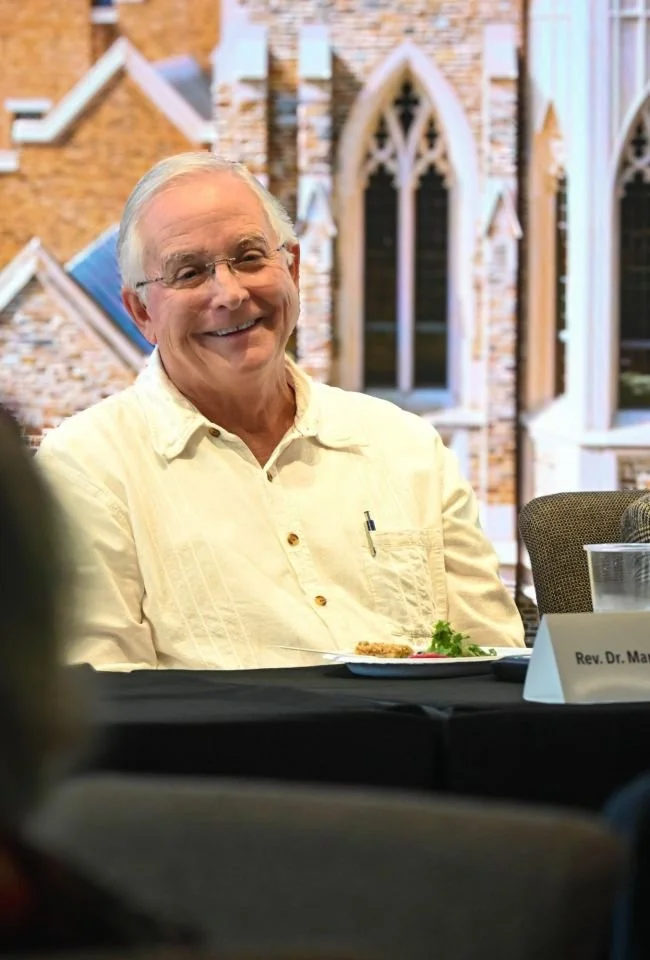
Herzog and those on the underside of history
Mark W. Wethington
March 2, 2026
On the morning of October 9, 1995, I received an urgent phone call from Kristin Herzog, wife of Frederick Herzog. Professor Herzog had just been taken from the Duke Divinity School to the emergency room of Duke Medical Center. When I got to the hospital Kristin was already in the emergency room with her husband, who had just died. As I stood by his bed, his earthly life gone, I thought of the words which he had written in the opening pages of his book God-Walk, a quotation from the Wisdom of Solomon, “Justice is immortal.” And so is Frederick Herzog.
I had the privilege of preaching at Professor Herzog’s funeral at the Pilgrim United Church of Christ, where he and Kristin had been active for over 30 years. Dr. Herzog’s life and faith were rooted in the church of Jesus Christ, and, in particular, a local church. I had had the joy of walking with Frederick Herzog on three different continents where I had learned under him, and where we had worked together: at the University of Bonn in Germany, with the Methodist Church in Peru, and in the Duke and Durham communities. On three continents Herzog had done his part to shape and prosper the immortality of God’s justice.
Frederick Herzog convinced me to remain in pastoral ministry. I had done some teaching at Duke, and, when I had finished my Ph.D. at Duke, I was invited to join the faculty of several academic institutions. On a flight back from one of these institutions, Herzog’s voice would not leave me alone, saying, “Stay in the pastoral ministry, that is where you are needed.” Soon after the plane landed, I called the leadership of the institution, who offered me a job, and told them I would not be accepting the position. I never had regrets. Frederick Herzog knew the most important place for Christopraxis to bear life and fruit was in the local parish. And for almost fifty years now the local church has been the primary place where I have been able to “apply” the Christopraxis which Herzog taught me and showed me. For his life, encouragement, and guidance I give God thanks.
In Bonn, Germany, in 1979, while we were “spatziering” together along the Rhine River, Herzog said to me, “I know it looks attractive to be in the academy, both at Duke and here at Bonn, but don’t allow them to incarcerate you! Please stay in the local church.” Why the local church? The local church, not the academy, is where “the rubber meets the road.” Herzog loved those idioms!
The church is the place where theory or plan is tested and implemented. As I have found over forty years of pastoral ministry, the church is the place where people of faith confront the hard places of life: marriage, separation, divorce; sickness, anointing and prayers of healing; issues of dying and death; life’s places of brokenness; the grace of listening and being embraced; the waters of baptism and baptism reaffirmation; the power of the Eucharist; inclusion and exclusion; both the brokenness and gifts of the community “outside” the walls of the church; all the “nuts and bolts” of the generations of life lived within community. While the institution of the church often functions as an “ivory tower”(as does the academy), the local church community (babies, children, youth, adults and the elderly) bring the realities of human life up close. As a local church pastor the experience of these realities and the presence of the living Christ have given expression to Christopraxis, in ways the academy usually only talks or writes about.
Herzog’s theology did not begin in a vacuum, nor in the halls of academia. It began in an awareness of and in relationship with those on the underside of history. For the most part you don’t meet those on the underside in the halls of the academy, and certainly not in the offices of the academy, but you meet them within the ministries of the church, on the streets outside the church, and huddled in the alley ways beside your church.
On January 30, 1993, while we were working together on a Peru/North Carolina relationship, Herzog wrote to me, “At the moment all I’m trying to do is to get a high-powered motor on the little ‘bark’ that’s left, so that it isn’t drawn down in some vortex on these treacherous shoals.” Classic Frederick Herzog! He was referring to a newly formed Peru/North Carolina relationship where a Camino Divino was coming to life, a sacred walk between church and academy, between Latinos and “Dukies,” between the poor and the rich. Dialogue and the forming of relationships between students, faculty and pastors of the Methodist Church of Peru and the seminary in Peru, and, those of Duke Divinity School and the North Carolina Conference of the United Methodist Church focused on how we experienced and addressed similar justice issues in different cultures; racism, sexism, classism, “intellectual-ism,” and all the other “isms” which divide and denigrate.
The civil rights movement in the United States, in which Herzog was so strongly involved, along with the various movements in Peru, which Gustavo Gutiierez addressed, melded together in the Peru/North Carolina relationships which were formed over these years. Our exchanges between North and South created a living relationship of justice-love, where our walking together shaped theology. So it always must be!
Mark W. Wethington did Ph.D. studies with Prof. Frederick Herzog both at Duke University, North Carolina, and at the University of Bonn, Germany. He graduated from Duke with a Ph.D. in New Testament Studies, with a minor in Christian Theology. He served for 29 years as a United Methodist local church pastor in the North Carolina Conference and then served as President of the Wesley Heritage Foundation for 15 years. The Wesley Heritage Foundation translated Wesley's Works into Spanish, resulting in a 14 volume work entitled Obras de Wesley. He is semi-retired in North Carolina where he serves part-time as a non-denominational pastor and with his wife, Beth, oversees Solitude Farm & Retreat.
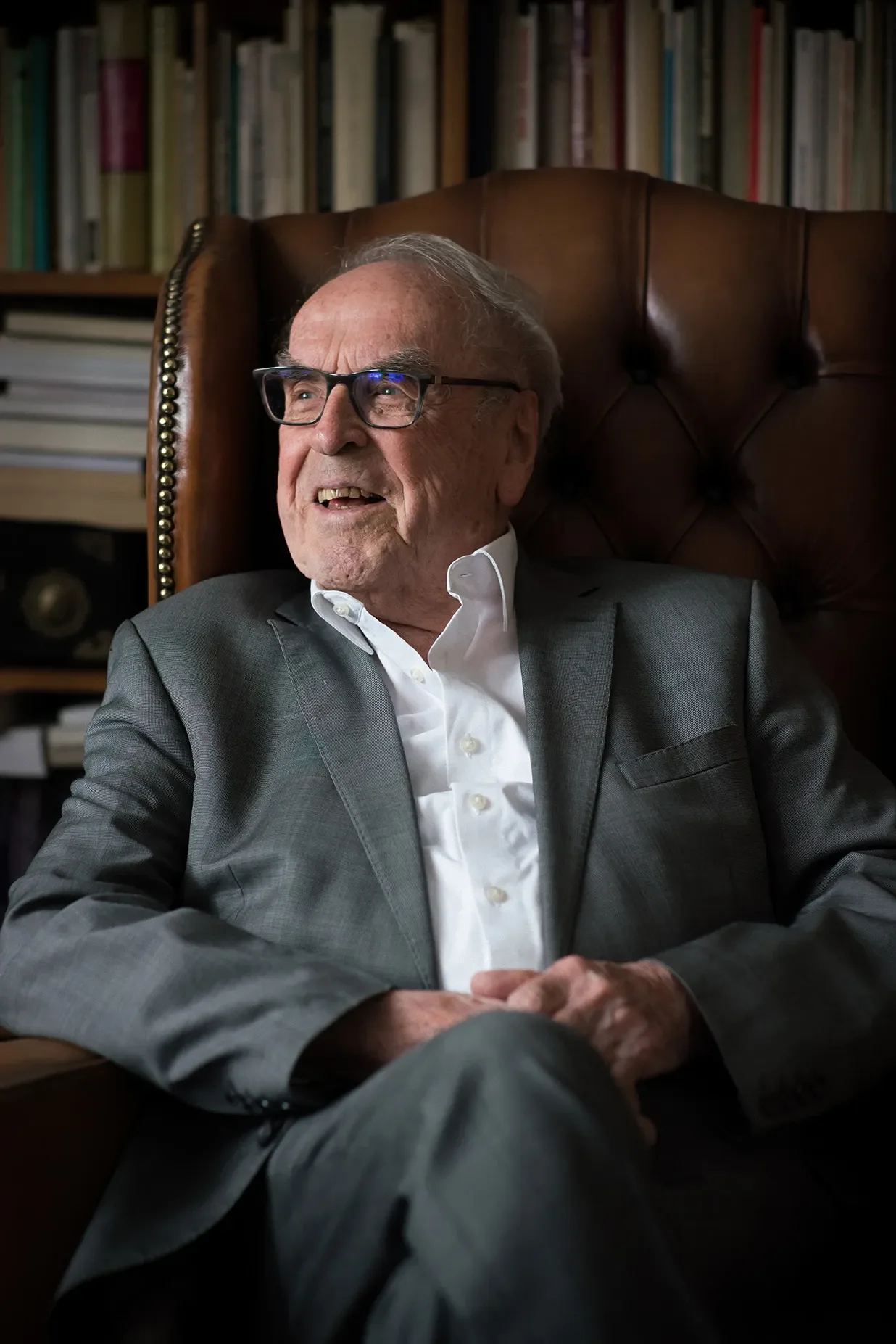
Letter from Jürgen Moltmann (May 2023)
Jürgen Moltmann
March 9, 2026
His [Frederick Herzog’s] name had become known through Barth's Church Dogmatics. He had the honor of proofreading Volume II/2, so he was immortalized in the preface. Fred introduced us to everyone at Duke University [Herzog arranged a guest professorship for Moltmann in 1967]. At that time, the only African American I encountered on the faculty was the janitor who took out the trash. Fred fought against racial segregation and took me along when he went to visit Mr. Edwards, a Black man who was paralyzed and bedridden, and to meet the sharecroppers who lived in the woods. Once we visited a church with a burned-down KKK cross on it. Fred had a diaconal heart. He continued in America the struggle of the “Confessing Church” in Germany under the Nazi dictatorship. Yet he also had a great sense of humor. I still remember how he would come out of the kitchen dancing and singing, “Here comes Peter Cottontail…”
Fred also introduced me to liberation theology in the United States, including the “Black theology” of Jim Cone, who later became my friend. We published Cone’s book Black Theology and Black Power, which came out in 1969, in German in Germany. Fred wrote an important foreword.
Fred was the first to speak of “liberation theology.” He wrote about liberation theology in the Gospel of John long before Gustavo Gutiérrez's famous book in 1971. He would eventually have a strong connection to Lima, Peru. He and Kristin even learned the Quechua language.
In 1967, the English translation of my book Theology of Hope was published. All the major newspapers reported on it. The students said to me, “You’ve made it.” I had obviously struck a chord with the American way of life. Fred and Dean Bob Cushman organized a nationwide symposium in early April 1968. Everyone who was anyone came, from Harvey Cox to Langdon Gilkey. I was arguing with Van Harvey about the untranslatable German word “Geschichte” [it means history as well as story] when Harvey Cox stormed into the hall and shouted, “Martin Luther King has been shot.” In Memphis, on April 4, 1968, the black civil rights leader and prophet of the “American dream” had been shot by a white man. The conference was closed down, the participants went home, the Black ghettos burned, Durham was under curfew. This was the turning point for Duke University.
Approximately 400 students, men and women, spontaneously came together for a vigil of mourning and sat for six days and nights, in wind and rain, on the quadrangle of the university and grieved for Martin Luther King. Finally, Black students from the neighboring college came and walked through the rows and joined in with the white students, and we all sang: “We shall overcome…”
Fred’s “American Dream” was realized: “All men are created equal.” With Fred's help, I saw the true face of America.
Jürgen Moltmann (1926–2024) was one of the most influential Protestant theologians of the twentieth century. Since the publication of his timely Theology of Hope in 1967, he had been a voice that theologians, pastors, priests, lay Christians, and even bishops not only listened to but sought out for guidance. His books are many, and many of them have become classics, not just Theology of Hope, but also The Crucified God (1974), The Trinity and the Kingdom (1981), God in Creation (1985), The Way of Jesus Christ (1990), The Spirit of Life (1992), The Coming of God (1996), and Experiences in Theology (1999). Even in his advanced age, Jürgen kept writing his customary two pages a day – a daunting pace he always recommended to his students. The seven decades of Moltmann’s publications mark nothing short of a theological era.